Pluribus cinematographer Paul Donachie talks to The Contending’s Ben Morris about reteaming with Vince Gilligan for the sci-fi series.
Paul Donachie’s cinematography on Apple TV+’s Pluribus helped create the sense of how large the world is while also creating a sense of isolation. From conjuring the vision of a deadly jungle to restocking an entire Sprouts store, all of it played into what the characters are going through in this new reality, and captured everything from the magnificent views of a city to mundane moments in a store.
The Contending: Drone shots are a major part of this show. What was it like to capture so much with them?
Paul Donachie: We used the drone mainly because it was just a good way to tell a story. For example, when the car arrives at the house at night, I thought it would be nice to have a top shot of that car arriving up the driveway with the headlights going. When we were filming the Darién Gap in Spain, we thought it would be better to get a wider top shot of the pool, and it was also scripted that we hear Manousos scream from a wide shot in the jungle so using the drone was essential there. We also got some great shots following his car through the jungle. I used it when I thought it would tell the story nicely and provide a good visual for what was going on fundamentally.
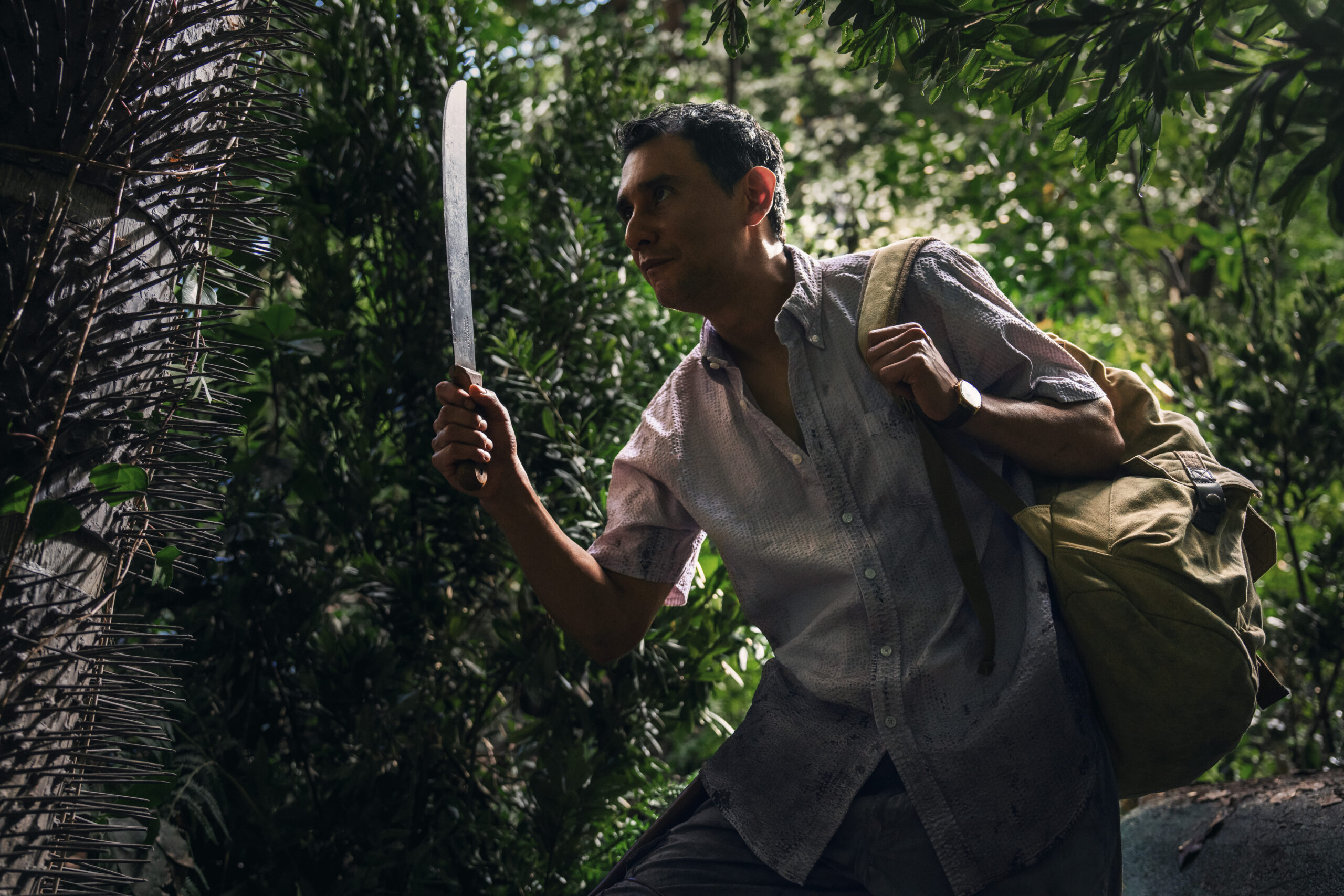
The Contending: Going through the jungle was such an intense moment in and of itself. Setting up the dangers of the place that he’s in, including the Chunga palms on the tree so early on, what was it like trying to create that mood?
Paul Donachie: We had to find a good location for it. Obviously, the Chunga plants didn’t exist in Spain, and we didn’t want to put any actors in real danger, so all of them were created by Denise (Pizzini), the head of our art department. The place we chose, I had to light up because it was deep in a valley that never got any sunlight. We were lucky that it was a place that could fit the bigger lights to create the atmosphere for that moment.
The Contending: With all of the joined people, a lot of it comes down to the way the actors were moving to keep us unsettled by it, but it’s also the way they’re shot. Just the way they repackage Carol’s grocery store, Sprouts, and move around her. Did that require anything particular from you in terms of shooting?
Paul Donachie: I mean, we had to see the fact that they were coordinated and that they did work as one mind. You had to make sure that all the background actors moved in a synchronized way and had very similar expressions on their faces. So there was a lot of work done by the assistant director’s team and the movement coordinators to make sure they looked coordinated. Obviously, we came up with shots to show that, and with the Sprouts shot, we also had to show the coordination with trucks coming in as well as people. So that was designed in prep about where they were going to go and how it looked to keep that one mind mentality.
The Contending: So often in this show, you are capturing such vastness and emptiness of any of the places we’re in with Carol, including even her home. How did you guys go about trying to create this sense of isolation for her with so many different places?
Paul Donachie: Obviously if there’s nobody around, it looks lonely, and obviously Rhea’s acting is hugely involved in that. But you just try and find shots that tell that story, you know, to see the expanse, or to see her being on her own. A shot I liked, which was in Episode 7, was the shot of the store where she goes and gets the paint. There’s this giant store that you know is empty, and she goes in and gets some paint on her own, doing all the tasks. I think scenes like that demonstrate that she was completely alone. Or when she was just messing around on a golf course while buffalo were roaming around. Stuff like that really showed her isolation.
The Contending: At the end of that episode, we have another golf scene where she’s just hitting balls into the buildings. It gives this great sense of how empty everything is with the scope of the city, and what she’s been doing. Did that require anything in particular to capture all that?
Paul Donachie: There’s a lot of VFX involved in that, obviously, but there was one little moment that I think showed that. When the golf ball hit the desk and knocked over a photograph of a family that we know are no longer a family. Little touches like that hammer home the message of that loss.
The Contending: You have worked with Vince Gilligan in the past. What was it like coming back into his world?
Paul Donachie: It was great. I mean, I’ve worked for him since 2015, doing Better Call Saul. They’re a great company to work for with very imaginative writing. It’s a big collaboration between everybody that works on the team. Working with Vince is a huge pleasure. He’s very receptive to ideas and generous, and he’s just a great guy to go to work with every day.
The Contending: Was there any particular challenge with this show over the work you have done with him in the past that stood out for you?
Paul Donachie: I think the size of it, really. I mean they built seven houses in a full lot. There’s some big stuff happening in the script; there are warehouses full of dead bodies, there are hundreds of people and vehicles leaving hospitals. Bigger set pieces like the Sprout Store compared to most of the set pieces on Better Call Saul and El Camino. Though in one of the episodes of Better Call Saul, I did shoot in a department store when Saul is helping the guy rob it. That was huge, because it was an empty store, and the art department had to fill that up. So with that shoot we were getting used to that idea, and then by the time Pluribus came along, we had a sense of the bigger things that we were going to have to work with. But it’s all very collaborative, and we have a great time doing it.
The Contending: In Episode 7, you also have that one magnificent shot of her on top of the building looking over the emptying city. I know there was some VFX work there, but what part did you play in that gorgeous scene?
Paul Donachie: We had to find a location where we could see the eye, which is where the two freeways meet in Albuquerque. Then we had to figure out a composite because we couldn’t take Rhea onto the top of that building for health and safety reasons. So we had to shoot several elements of that, and there was a lot of VFX involved. Then, we also built a set on stage. We had to shoot some of it, where the houses were and get drone shots of Rhea. So all these shots we had to marry up with VFX and with taillights of cars leaving. That was a bit of a number. There were lots of elements involved in fabricating that particular sequence.
The Contending: Final thoughts?
Paul Donachie: It was just a pleasure to work with Vince and Rhea–that was wonderful, and I hope everybody enjoyed the show.
Pluribus is streaming on Apple TV.