Unspooled film is set on fire in the first images of Ben Proudfoot’s powerful documentary feature, The Eyes of Ghana. It’s a horrific image to behold, especially on the first full night of this year’s Toronto International Film Festival which celebrates its fiftieth year in 2025. I almost expected someone in the crowd to yell out for the crackling fire to be put out even though we were watching it happen on screen. One might assume that Proudfoot’s film is solely about politics, the history of Ghana, or a profile of the country’s first president, Kwame Nkrumah. For those who are unaware of Ghana’s past, it could serve that purpose, but Proudfoot’s remarkable film goes beyond that to tell a story about visibility and, ultimately, preservation.
Proudfoot’s filmography is bursting with everyday people who live extraordinary lives or do extraordinary things. What’s truly captivating about his work is how easy his conversations are as thety look right back at the camera. People have been staring into the lens for literal decades, but there is something indescribable how Proudfoot does it. In a way, I don’t even want to know “the hows” of it all, because it’s one of the most alluring cinematic magic tricks that we have left.
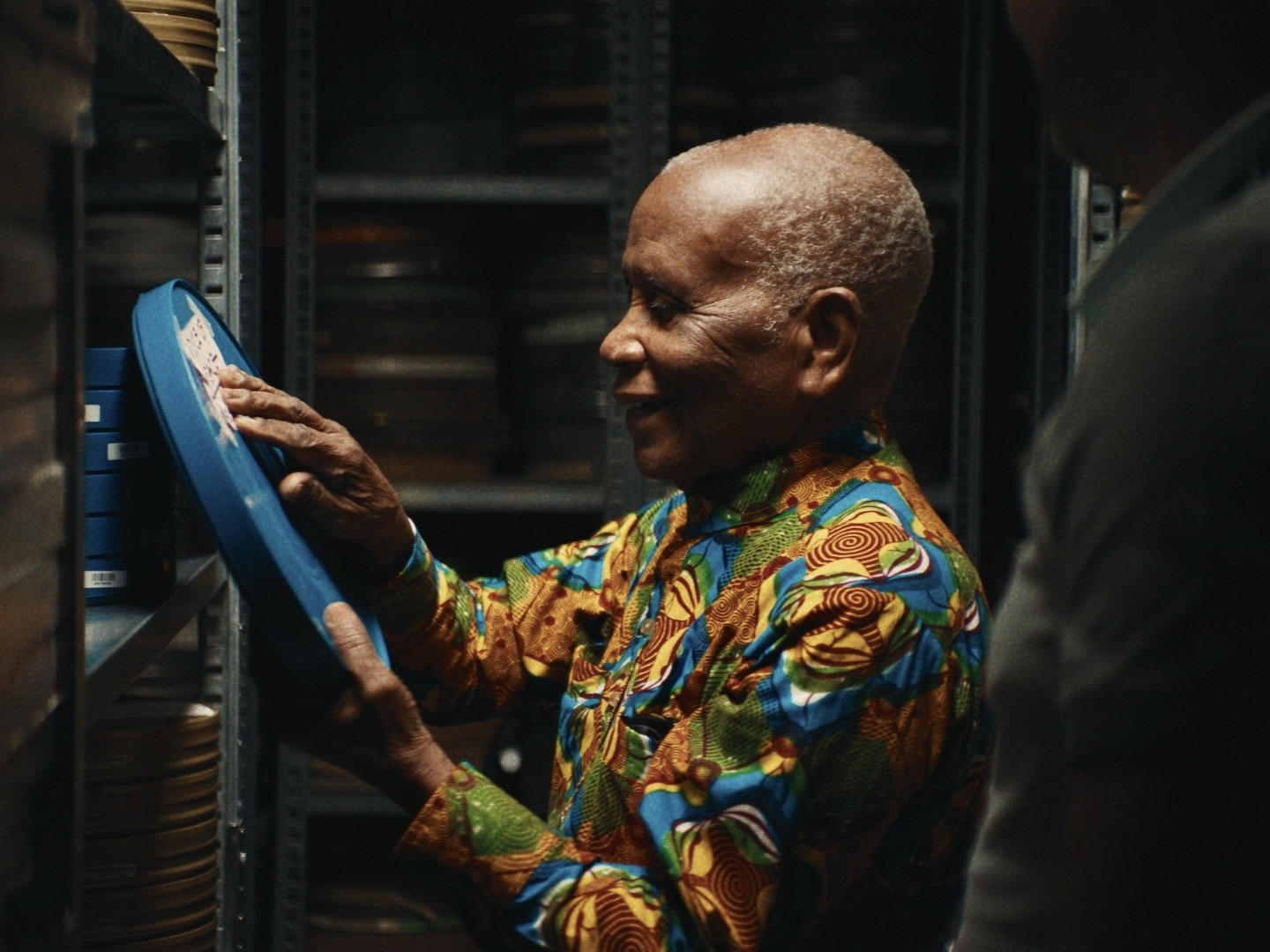
For Ghana, we center on Chris Hesse, the personal cameraman for Nkrumah when he was in office from 1952 to 1966 (Hesse began this partnership in 1956). He was brought on to document all of Nkrumah’s speeches and public appearances, but this leader was also a rabid lover of film. It wasn’t just about entertainment, though. Nkrumah knew that a vast collection of films and media can shape how audiences perceive time and history, and he wanted that for the country that he was shaping. In 1966, Nkrumah’s government was overthrown in a coup, and all of the footage shot by Hesse was ordered to be destroyed. What we didn’t know for years was that the negatives of were locked away in London, and Proudfoot’s film highlights how hours and hours of filmmaking is on its way to being digitized and seen for the first time in over five decades.
When we see a title of a film that Nkrumah and Hesse worked on appear on screen, the text informs us how long ago these films were shot and how each one was restored just this year. There is a sound that accompanies all of these titles reminded me of a projector whirring and heating up, and it jumpstarts our excitement for the footage we are about to see. It’s thrilling.
The eyes of the title belong to Hesse since he shot so many films about his country, but I couldn’t help but think about how the eyes of a cinematographer become our viewpoint as the audience. Hesse wants us to see his country the way that he sees Ghana, so we are comforted by his presence. In interviews, his eyes twinkle and his laugh is easy. At the same time, we meet Anita Afonu, a producer on Ghana who is invested in retelling her country’s lost history (her film, Perished Diamonds, can be watched here). There is such urgency in her voice, but you can feel her warmth and her open heart.
One of the most thought-provoking exchanges comes when a young film student asks Hesse–who, at the age of ninety-three, mentors young, promising talent–if there is any footage that shows that Nkrumah was a good person. By the time he was removed from office, the president was mired in controversy, and some people do not think of him fondly. Hesse tells her that he cannot prove that anyone is a saint or a devil–we cannot make up someone else’s mind. All a filmmaker can do is present the truth, and you can then determine how you feel. In this age, that might be Ghana’s most vital message. “Keep filming,” Hesse says, a phrase that could become not just the film’s mantra but a reminder to burgeoning talent everywhere. A film camera is one of the most honest tools we have. The finale, which needs to be seen to be believed, is tremendously moving. Composer Kris Bowers has a knack for writing and composing music that gently lifts your entire body by your chest, and his work on Ghana might be his most accomplished yet. His motifs are so rounded and full that you can feel his reverence for Ghana and her people.
The Eyes of Ghana goes extends beyond what a historical documentary would do. Proudfoot shows how history can live alongside our present. It is never too late to discover our past, our passions, and look forward to a bright future. This film begins with an image of destruction, but it ends with the fertile hope of creation set within the fiery hearts of the future of Ghana.
The Eyes of Ghana is currently seeking distribution.