Austrian filmmaker Manuel Wetscher’s feature debut, Eklipse, is set in August of 1999, right before a solar eclipse, in a remote alpine dairy farm nestled in the Tyrolean Alps.
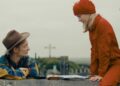
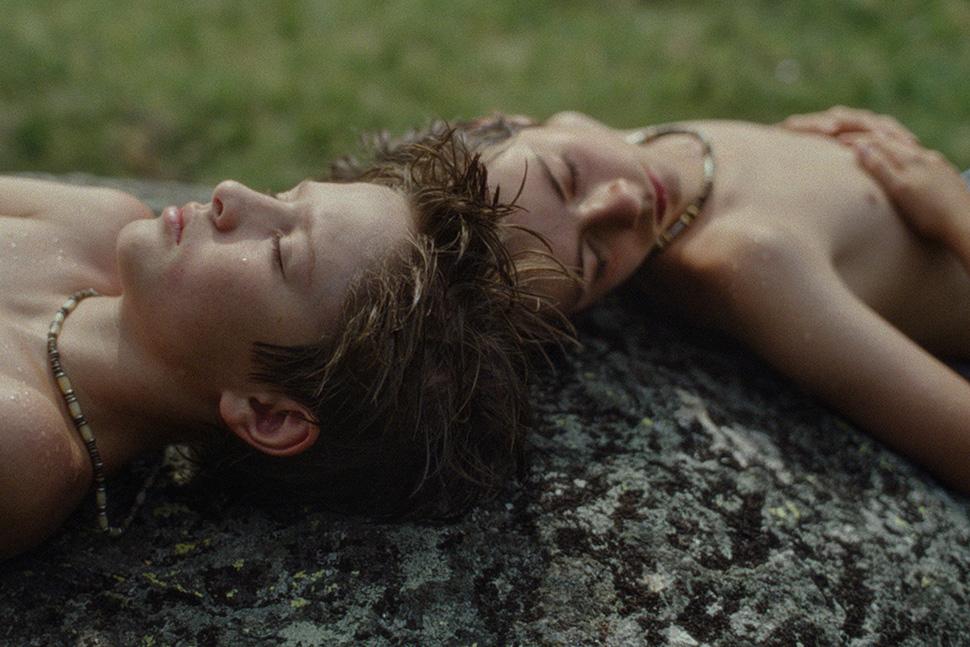
The film opens with two 12-year-old cousins (although we don’t initially know their relationship) playing rock paper scissors. Tomy (Moritz Hohlrieder) is staying with bestie Chris (Finley Brown) on his Uncle Georg’s (Hannes Perkmann) farm, milking cows (cows, yay!), shoveling shit, building a damn and doing general farm chores along with horsing around in the woods, when they get a break from their work.
Tomy’s father is in the hospital, and we are eventually privy to the reason why, he has AIDS, known in the area as “the gay disease.” Tomy’s mom (Lisa Schützenberger) had decided to keep the news from her son, fearing he’s too young to deal with something so challenging and heady. But when a local asks Chris if he is afraid of getting “the gay disease,” the boy has no idea how to handle the news and begins to reject Tomy and cut him out of his daily life. Tomy has no idea why he’s being treated as an outcast but soon finds out.
Eklipse is a sincere and contemplative look at small town minds and the ignorance and prejudices inherent in society (not only in small towns), especially surrounding AIDS and how it is transferred. At one point Chris says to a neighbor, that it’s God’s punishment for being gay and has to be told that “it’s just a disease.”
Too often, family members of people with AIDS were treated like pariahs, stigmatized and ostracized just for being related to that person. Imagine what the AIDS patient went through. And the fact that it takes place in 1999, a time when AIDS was no longer a death sentence speaks volumes to the legion of small villages and towns where homophobia ran (and still runs) rampant.
The economic script by Wetscher and Bernhard Jarosch saves a lot of exposition for later in the film and is light on dialogue—except in key moments. Figuring out familial relationships becomes a bit frustrating and some could have been established earlier for clarity, without hurting the film. Also, it’s hard not to notice the homoerotic manner in which the boys are filmed together, which makes the story all the denser.
Simone Hart’s stark cinematography adds to the uneasy feel throughout.
Hohlrieder and Brown do fine work. Schützenberger is heartbreaking.
The film is ultimately a fascinating exploration of how fear, too often, drives people to behave cruelly and too often abominably.
The film is part of the Horizons (Orizzonti) section of the Venice Film Festival.
In German, with English subtitles.