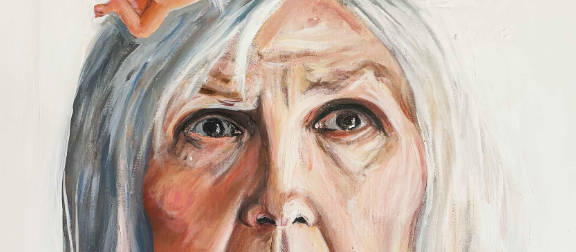
I guarantee that you will see someone you know in the eyes of Julie Ariola’s Mary in Ryan Noufer’s touching and affecting drama, Mary the Widow. There is something refreshing in how the actress allows Mary’s emotions to wash over her face as she enters a new kind of atmosphere to find love again, and you can almost feel Noufer’s promise to honor the character. We never lose those feelings of longing for love, whether that love was lost of never arrived in the first place, but this filmmaker unfurls this story of memory and yearning with such tenderness and care that you cannot help but feel the personal inspirations behind it.
At the suggestion of her daughter, Penny, Mary attends her first ever round of speed dating specifically for those who have lost a loved one, and we can immediately sense Mary’s apprehension. When she enters the space, all eyes fall on her, as if she is the only eligible bachelorette in sight, and every prospective date has only three minutes to make an impression. For some gentlemen, their flirtation skills are a little rusty, and Mary doesn’t think that she will connect with anyone in a real or honest way. When she is about to write-off the enter experience, Stephen Tobolowsky’s Ed has a seat, and the entire vibe shifts–Noufer somehow changes the air in the room. It’s lighter, easier, and Mary can finally relax around someone.
Noufer reveals the inspiration for this film came from his own grandmother, and you can feel that influence throughout his entire film. The dramatic underpinning’s of Mary the Widow grow more concerning as the film continues, but I won’t spoil here how the director uses them directly. Mary’s troubles come out in a startling way in the film’s final third, but he never showcases it without considering the feelings of his main character. He handles Mary’s confusions with grace but also with a determination to be there for her as well. Some features films feel like they abandon the plight of characters who are going through something similar–Noufer lets go of her hand.
As we grow older, we can look back at our elders with newfound fascination since, when we are young, our lives are entirely different from theirs. They can literally be polar opposites. For some of us, we only know our parents’ parents for a few years while so many others are fortunate enough to be raised by them or have them as integral parts of our lives. In a lot of ways, it feels like Noufer is trying to reach out to comfort someone that he has lost, a beautiful sentiment that we can all feel the reverberations from even as our experiences differ.