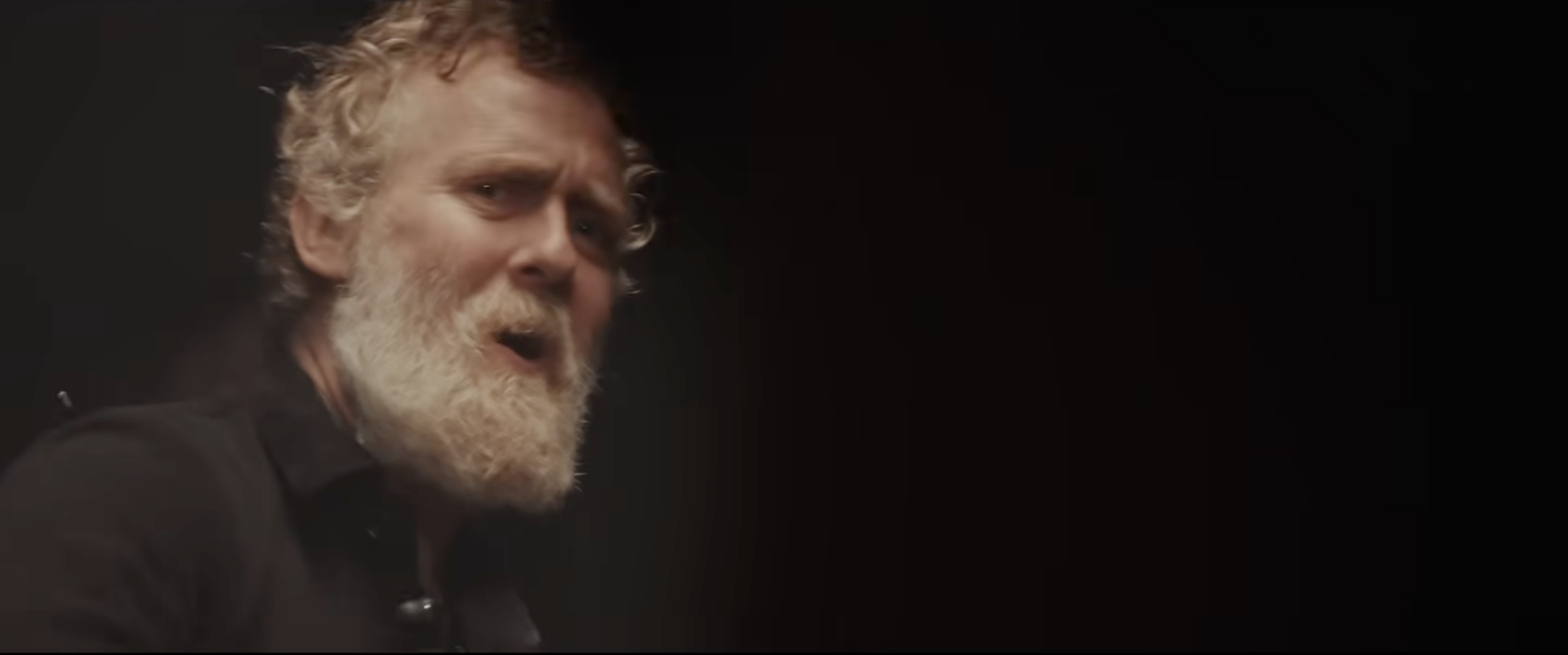
Before I get to the work that Glen Hansard is best known for—the film and soundtrack of the great organic Irish musical Once—it’s important to speak to the rest of Hansard’s history and career—the less well-known parts.
Born in Dublin in 1970, Hansard’s first brush with success came with his outstanding Irish rock band, The Frames. With the first album, Another Love Song (1991), the band would become a staple in their homeland, if not the rest of the world. That same year, Hansard played the colorfully named Outspan Foster, the guitarist and founding member of the fictional blue-eyed soul band, The Commitments, in the film by the same name. The rollicking film about a band that catches fire, but can’t hold the flame, The Commitments has become a much-beloved cult film. Directed by Alan Parker and written by Roddy Doyle (the film is based upon his novel), it may not have made a huge splash upon its release, but I dare you to find a single person who has seen it whose eyes don’t roll in the back of their heads in a moment of rapture just thinking about the movie.
Over the next decade, Hansard (who sang lead and was the band’s primary songwriter) released three more albums with The Frames, Fitzcarraldo, Dance With the Devil, and the extraordinary For the Birds, which became their first top ten album in Ireland in 2001. Somehow, 2004’s Burn the Maps and 2006’s The Cost were even better (hitting number one and number two on the Irish album charts, respectively). The Frames combined folk and anthemic rock in a way that preceded (and exceeded) the far more popular Mumford & Sons.
Hansard recorded the first Swell Season album with Marketa Irglova in the same year that The Frames released The Cost. As a stripped-down folk duo with a touch of rock, soul, and grit, Hansard and Irglova’s self-titled debut was one of the buried treasures of 2006, one that would not stay covered for long.
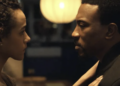
A former founding member of The Frames, John Carney, a fledgling filmmaker, reached out to Hansard and Irglova about making a micro-budget indie called Once. In the film, Hansard plays an Irishman working at his da’s vacuum cleaner shop when not busking in the streets of Dublin for stray cash and some semblance of artistic fulfillment. Irglova plays a Czech immigrant who sells flowers in those same streets to get by. She also happens to be a very good piano player. The scene in which she showcases her ivory skills in a music store, with an owner kind enough to let her practice on a piano she could never afford, is one of the loveliest moments ever captured on film.
Over the course of Once, the two flirt with romance, but never cross the ultimate line despite their shared attraction. Irglova’s character is married, and despite her youth, she is the more pragmatic of the two. But she loves the songs of this new friend, and on a shoestring, they find a rhythm section and record an album in a single night. The engineer in the studio is a jaded middle-aged man who isn’t entirely thrilled to be adjusting volumes and turning knobs at the soundboard. That is, until he hears their sound.
As the band begins to play, the engineer’s skepticism disappears, and he begins to address the soundboard with the fullness of his capacity. It’s not difficult to understand why. The music is so full of yearning, heart, and soul. Once the album is completed, Hansard’s “Guy” plays it back for his da. Guy’s pensiveness is pushed back upon by his father’s low-key but unmissable joy. The next step is to take these songs to London, alone, where hope and fear reside in the form of major record labels.
Before Guy heads off to London, he stops at that music store where Irglova’s character played for him. He makes a purchase, and as his travel begins, an instrument arrives at the home of his winsome bandmate. It’s as perfect an ending to a film as I’ve ever seen. Some people come into our lives but for a moment, but what happens in that moment lasts for a lifetime. If Once is about anything, it’s about that.
I saw Once at a theater on a Tuesday night, by myself. When I say I sat by myself, I don’t just mean that I entered the theater alone; I mean that there was no one else in the movie house but me. I had Once all to myself. I don’t know that I can describe what a wondrous experience it was to sit through that film as if I was in a greatly expanded version of my own living room, but I will say this: If you’ve ever seen a film that feels like it was made for you and you alone, Once was that film for me.
As a person of Irish descent, in love with Hansard’s music, and a believer in endings that are somehow satisfying while not giving you what you think you want, Once was the knees that the bees rest upon. Remarkably, while I may have been alone that night, I wasn’t alone in my appreciation. Produced on a microscopic budget of $150,000, Once made over $20 million at the box office worldwide. It also won the Independent Spirit Award for Best Foreign Film and an Oscar for Best Song for the gorgeous ballad “Falling Slowly.”
Ever the musician’s musician, Hansard made no great effort to parlay his screen success into further cinematic endeavors. He toured with Irglova, who, for a moment, became his partner offstage as well. He and Irglova made two more Swell Season albums together (Strict Joy and Forward in 2009 and 2025). Hansard recorded one more album with The Frames, 2015’s Longitude, and embarked upon a successful solo career, releasing five highly regarded albums under his name from 2012 to 2023.
The last time I saw Hansard on screen was in the Disney documentary, Bono & the Edge: A Sort of Homecoming. The film, directed by the Oscar-winning filmmaker Morgan Neville, features Hansard’s long-time friends from U2 as they trace the roots of their Irish upbringing and the band’s career. Hansard is a part of the band’s extended family and is featured on guitar and vocals in several live performances led by Bono and the Edge. His heartfelt and full-throated performances in the service of friendship are undeniably moving. There is a moment in the film when Hansard, off the cuff, recites a beautiful poem by Moya Cannon, called “Carrying the Songs,” in front of the documentary’s host David Letterman that brings the famously flinty and acerbic late-night host to a state of wonder. Letterman also can’t help but take note of Hansard’s crystalline blue eyes that peer out of a working artist’s well-lined face.
Those eyes took in sights, and Hansard’s pen and voice recited stories. None better known than Falling Slowly, which plaintively includes the line, “Take this sinking boat and point it home, we still have time.” Have you ever read anything more Irish than that? The mixture of impending doom with unfailing hope? I’m not a religious man, but I do believe that Hansard’s boat was always pointed home. I just wish he’d had more time to tell us more stories, to carry more songs.
Glen Hansard died on July 29, 2026. He was 56 years old.