“It could be anybody,” says Marc Rabins about who might be responsible for the murder of his former lover, Billy Newton. Those are not the words that you typically want to hear when exploring the violent circumstances surrounding a cold case from 1990, but Rachel Mason’s My Brother’s Killer expertly sets the scene of how and why there was so much reluctance for anyone to come forward or explore this case further. Mason’s film goes places you never expect it to go.
West Hollywood was a haven to gay men in the late eighties and early nineties, because it felt like such an oasis from the real world. There are places where queer and trans people can feel themselves literally at ease, because of the safe surroundings and the people who populate them. That’s why it was so shocking when a decapitated and head and feet were found in a dumpster so close to Santa Monica Boulevard.
Mason chronicled her family’s connection to the gay community in her vibrant film, Circus of Books, and she chats with her mother, Karen, throughout this exploration of Newton’s murder. She notes at the film’s start that his killing was never mentioned in the Los Angeles Times but it was reported in The Advocate. That alone shows how the queer community never felt part of a larger conversation, but, at the same time, illustrates how they had to find information on their own as a collective. Mason’s film spends a lot of time with LAPD homicide detectives Wendi Berndt and John Lamberti, who are still haunted by the lack of evidence in this case. Mason continually brings us back to the image of five thick blue three-ring binders from this case. We feel their heft, as if they are threatening to tumble over. How can so much collected information yield no results?
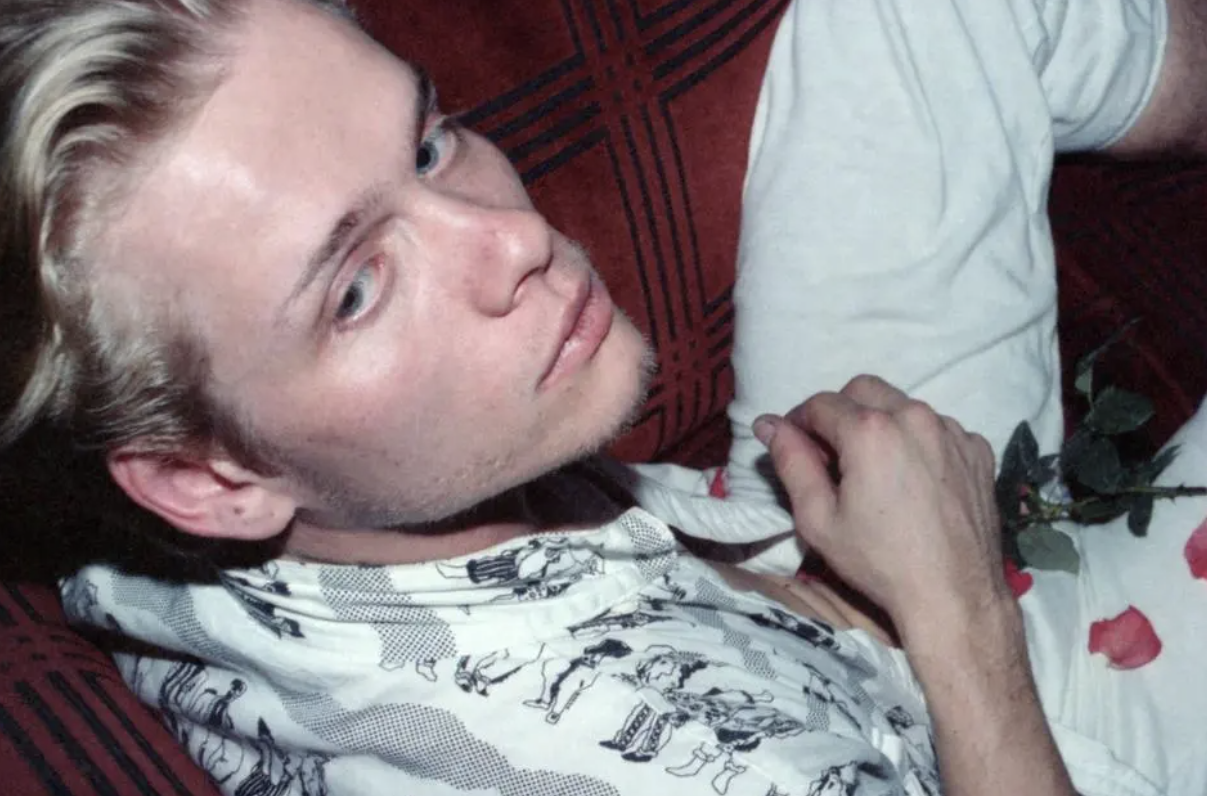
Newton’s face pieces the camera. In both candid photos from Rabins or clips from his work in porn (as Billy London), we cannot help but detect a tinge of sadness in Newton’s eyes. The young and the beautiful are the most vulnerable. On the night that he disappeared, did he just climb into the wrong car? Was he killed by someone he knew? Was it random?
Mason discovered this case through that Advocate article and then learned that her parents employed Rabins at their bookstore without knowing that he just got out of prison or had a connection to Newton himself. She then came across the podcast episode of Dinner Partners with Christopher & Eric from 2020 where hosts Christopher Rice (yes, I am still obsessed with his books) and Eric Shaw Quinn remember the case from three decades prior. There is a difference between being fascinated with true crime in your own backyard and taking a step towards it. As Mason wades into this world, we get a keen sense that we might not fully understand how dangerous these riptides can be, but this filmmaker is a steady guide.
Beneath all that decadence, Mason keeps us attached to people who knew Newton (with his sister) and other people familiar to that world. This would feel like an entirely different film if that wasn’t utilized. We detour back to Newton’s home life and learn about he felt he needed to be in a larger city to thrive as an out gay man. When we hear about the formation of Queer Nation, their motto of “An attack on one of us is an attack on all of us” rings especially true.
The final third of Killer has a real propulsive quality, and a final interview is so chilling that it will make your heart race. The more unfamiliar with this story going in, the more satisfied you will be at its outcome. Mason shows how desperation can be used as dangerous currency when it fall into the wrong hands, and her film is a terrifying and tragic ride.